

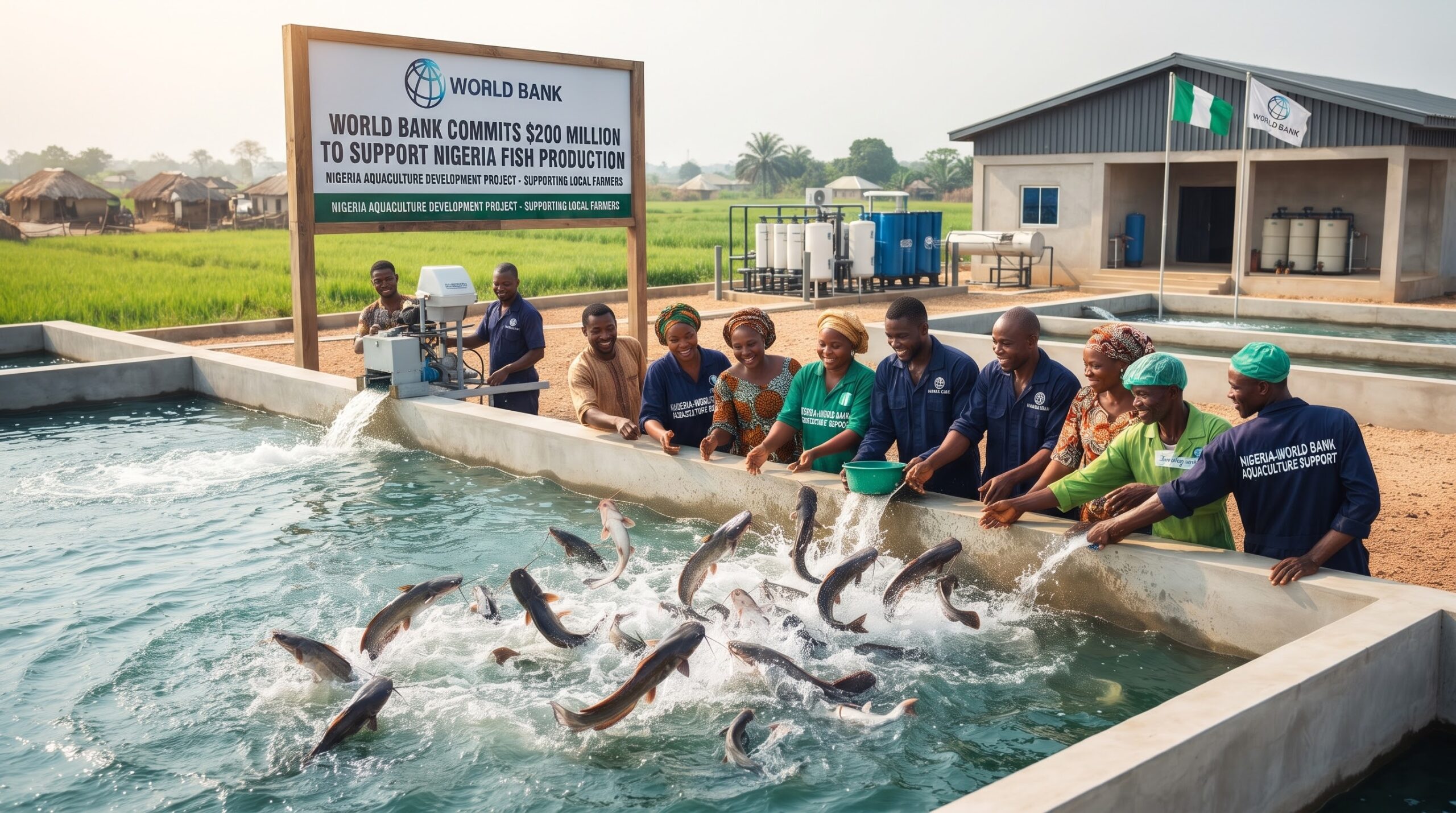

The World Bank has committed $200 million to support Nigeria’s fish production and help address supply gaps, according to a report by TheCable. The planned support puts attention on a sector that affects food prices, nutrition, jobs and the livelihoods of communities involved in fishing, processing and distribution.
Fish is an important source of protein for many Nigerian households, but domestic supply has often struggled to meet demand. That gap can increase reliance on imports and expose consumers to exchange-rate pressure and higher international prices. Improving local production could support food security while creating opportunities in aquaculture, feed supply, cold storage, transport and retail.
Funding alone will not determine success. Producers need reliable access to fingerlings, feed, water, power, finance and markets. Cold-chain infrastructure is especially important because losses after harvest can reduce incomes and keep prices high. Clear implementation and support for small and medium producers will be key to ensuring that the benefit reaches beyond a few large operators.
The initiative could also interest young entrepreneurs looking beyond traditional farming. Fish production combines agriculture, logistics, technology and consumer markets, creating room for businesses that improve records, input supply, processing or direct sales. The next important development will be details of how the funding will be structured and when programmes begin.
Why fish production matters
Nigeria has strong demand for fish, yet local producers still face high feed costs, limited cold storage, weak processing capacity and access-to-finance constraints. Targeted support could help reduce those bottlenecks and strengthen a value chain that supports farmers, processors, transport workers and market traders.
The impact will depend on how the money is used. Funding that reaches small and medium producers, improves disease control and supports reliable storage can reduce losses and create more stable supply. Projects also need environmental safeguards so production growth does not damage waterways or local livelihoods.
What to watch
Clear project details, beneficiary criteria and regular reporting will show whether the commitment is translating into results. Consumers and businesses will watch for changes in output, prices and the availability of locally produced fish.
Source: TheCable
Discover more from Waves Times
Subscribe to get the latest posts sent to your email.