

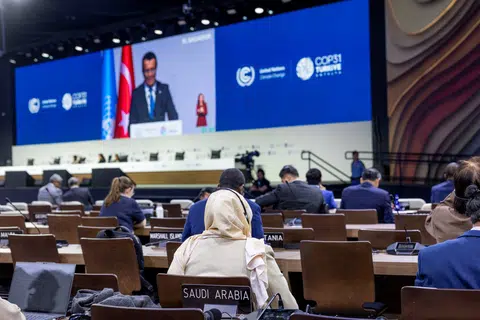

Saudi Arabia has come under criticism following the collapse of the COP31 climate negotiations in Antalya, Turkey, after disagreements over fossil fuels prevented participating countries from reaching an overarching political agreement.
Negotiators from Europe, Africa, Asia, Latin America and small island nations accused Saudi Arabia of exercising disproportionate influence during the discussions, particularly by resisting proposals that called for countries to move away from oil, gas and coal.
The conference ended on Sunday, November 22, 2026, without a comprehensive political deal. It marked the first time since the 2009 Copenhagen climate summit that a major United Nations climate conference failed to reach an overarching political agreement.
Saudi Arabia Accused of Blocking Fossil Fuel Commitments
A major disagreement at COP31 centred on whether the final agreement should include a clear commitment to transition away from fossil fuels. A coalition of approximately 130 countries, including African nations, supported stronger language calling for a transition away from oil, gas and coal.
However, Saudi Arabia and other oil-producing countries opposed explicit references targeting fossil fuels, maintaining that these energy sources would remain important to meeting global energy demand. Negotiators also accused Saudi officials of having unusually strong access to the Turkish and Australian conference leadership during the final stages of discussions.
Ireland’s Climate Minister, Darragh O’Brien, speaking on behalf of the European Union, criticised the influence of oil-producing countries during the negotiations. The Turkish COP31 presidency rejected allegations of preferential treatment, insisting that no country or negotiating group received special access.
130 Countries Push for Stronger Climate Commitments
The coalition of approximately 130 countries sought to ensure that the final agreement included a clear reference to transitioning away from fossil fuels. Their position reflected concerns that continued dependence on oil, gas and coal would undermine international efforts to limit global warming. The disagreement intensified after a revised negotiating document removed explicit references to fossil fuels, despite opposition from the European Union and several climate-vulnerable countries. The revised draft also retained strong language supporting carbon capture technologies, another issue that divided participating nations.
Some countries argued that carbon capture could help reduce emissions, while others expressed concern that excessive reliance on the technology could allow continued fossil fuel production without sufficiently addressing its environmental consequences.
African Countries Left Disappointed Over Climate Finance
The collapse also affected African countries, which had entered the negotiations seeking stronger financial commitments to help developing economies respond to climate change. African negotiators supported calls for increased funding for climate adaptation, particularly as countries across the continent face growing challenges from droughts, floods, extreme heat and other climate-related disasters.
One of the proposals under discussion involved increasing annual adaptation finance to at least $120 billion by 2035. However, subsequent versions of the negotiating text retained the ambition to increase funding without clearly specifying the proposed figure. The failure to reach an overarching agreement left important questions about climate financing and support for vulnerable countries unresolved.
EU and Other Countries Reject Final Proposal
The European Union and several climate-vulnerable countries opposed the revised agreement because it did not contain sufficiently strong language on fossil fuels. The negotiations became increasingly difficult as countries disagreed over the wording of the final document and the level of ambition required to address global warming.
The absence of active United States participation and limited coordination between Washington and Beijing were also identified by negotiators as factors that weakened efforts to secure a compromise.
Eventually, COP31 President Murat Kurum acknowledged that countries had failed to reach an agreement and decided not to present another negotiating text. Although the overarching political deal collapsed, some progress was recorded on separate technical issues, including discussions on climate finance and adaptation.
Saudi Arabia’s Position on Fossil Fuels
Saudi Arabia has consistently opposed international climate agreements that explicitly target the production and use of fossil fuels. The kingdom, one of the world’s major oil producers, argues that oil, gas and coal will remain part of the global energy mix for the foreseeable future. Its position reflects broader concerns among fossil fuel-producing countries about the economic implications of rapidly reducing dependence on traditional energy sources.
However, countries particularly vulnerable to climate change argue that stronger commitments are necessary to reduce emissions and limit the long-term effects of global warming. The disagreement at COP31 has once again exposed the competing economic and environmental priorities shaping international climate negotiations.
What Happens After the COP31 Failure?
The collapse of the negotiations leaves major climate policy questions unresolved ahead of the next round of international discussions. Countries will still need to address the future of fossil fuels, climate adaptation financing and the support required by developing economies to transition towards cleaner energy systems. The outcome has also raised concerns about the ability of the United Nations climate negotiation process to achieve consensus when major economic and energy interests conflict.
Despite the failure to reach an overarching agreement, existing international climate commitments, including the Paris Agreement and previous COP decisions, remain in place. For African countries and other vulnerable nations, the immediate concern is whether future negotiations will deliver the financial support and stronger emissions commitments that remained unresolved in Antalya.
Discover more from Waves Times
Subscribe to get the latest posts sent to your email.