

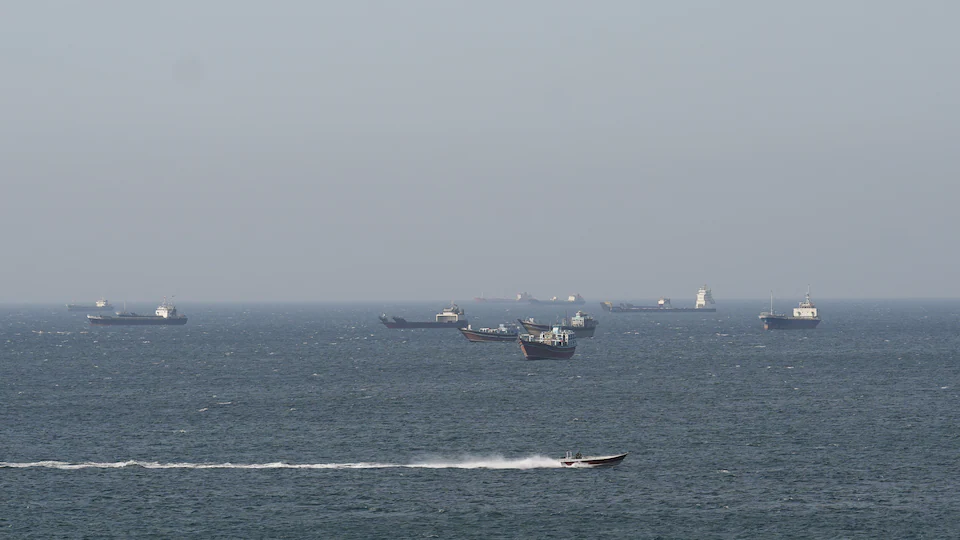

Iran has said it is prepared to withstand the United States naval blockade, with government officials pointing to increased cargo movement through alternative borders and sufficient strategic reserves as the country battles a sharp rise in inflation.
Iran’s First Vice President, Mohammad Reza Aref, said on Wednesday that Tehran was not concerned about the US blockade, arguing that increased cargo unloading and customs clearance through other borders had helped maintain supplies.
His remarks come as the Iranian government faces mounting economic pressure, with food prices and other essential commodities becoming increasingly expensive amid the prolonged conflict with the United States.
Iran Says Strategic Reserves Remain Strong
Aref said the country’s strategic reserves were in a strong position and that supplies of essential goods remained sufficient to support domestic needs. According to the vice president, increased movement of goods through non-southern borders demonstrated that the country could continue receiving supplies despite restrictions affecting its ports. However, he did not provide specific figures on the volume of goods entering the country or the level of strategic reserves available.
The US reimposed its naval blockade on Iranian ports in July, while Washington announced additional measures earlier this month aimed at restricting the movement of weapons and sanctioned materials across Iran’s land borders and the Caspian Sea.
Iran Government Seeks to Stabilise Prices
Beyond the blockade, Iran is facing mounting pressure from rising living costs, particularly food prices, which have significantly affected households. Aref said the government was working to prevent further increases in the prices of basic goods for at least the next three months, although he did not outline specific measures to achieve the target.
Data from Iran’s Statistical Centre showed that consumer prices in October were 88.7 per cent higher than a year earlier, while food and beverage prices rose 112.6 per cent over the same period. Annual average inflation also accelerated to 76.8 per cent, highlighting the scale of the country’s economic difficulties.
Pezeshkian Pledges Support for Lower-Income Communities
Iranian President Masoud Pezeshkian has separately said his administration intends to direct additional budget resources and energy savings towards improving living conditions, particularly for poorer communities. The government’s efforts come as the prolonged conflict and restrictions on trade continue to put pressure on the Iranian economy, raising concerns about the affordability of food, household necessities and other basic services.
Iran’s ability to maintain supplies and contain inflation will remain a key challenge as Tehran navigates the economic consequences of the US blockade and the wider confrontation.
Discover more from Waves Times
Subscribe to get the latest posts sent to your email.