

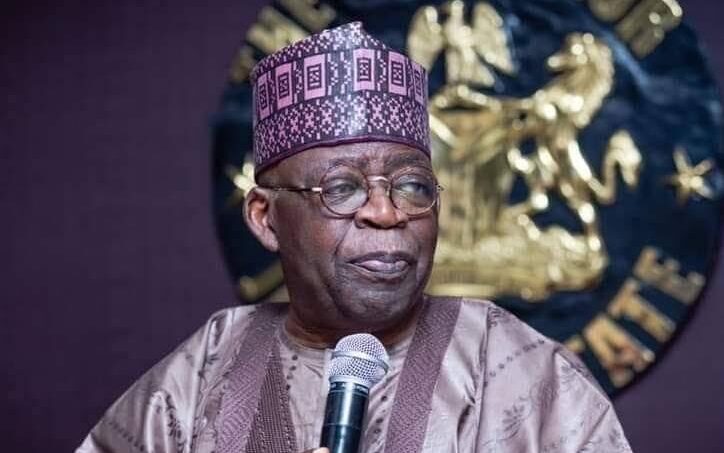

President Bola Tinubu has proposed reducing Nigeria’s 2026 national budget by approximately N3.2 trillion while retaining the government’s N29.2 trillion borrowing plan. The revised proposal seeks to reduce total expenditure from the N68.3 trillion originally approved by the National Assembly to approximately N65.18 trillion. The President’s request was communicated to the National Assembly in a letter dated November 20, 2026, and presented during plenary on Tuesday, November 24.
The proposed adjustment is part of efforts to align government spending with available resources and existing financial obligations. However, the decision to retain the borrowing plan and fiscal deficit means the reduction in expenditure will not translate into a smaller financing gap.
Details of Tinubu’s Revised 2026 Budget
Under the revised fiscal framework, aggregate expenditure is projected at N65.176 trillion, compared with N68.323 trillion in the approved budget. The government expects to generate N33.720 trillion in revenue, including receipts from government-owned enterprises. Capital expenditure is projected at N26.232 trillion.
Despite the reduction in spending, the fiscal deficit remains unchanged at N31.457 trillion, representing approximately 5.64 per cent of Nigeria’s Gross Domestic Product. The proposed borrowing plan also remains at N29.218 trillion, comprising N18.428 trillion in domestic borrowing and N10.790 trillion in external borrowing. Tinubu explained that the proposed $7.7 billion external borrowing would finance existing foreign borrowing provisions rather than increase the government’s overall borrowing limit.
Why the Federal Government Wants to Reduce the Budget
According to the President’s communication, the revision is intended to accommodate existing government commitments and improve the credibility of budget implementation.
The proposed adjustments are expected to address several financial obligations, including:
Regularising certain expenditures incurred by the Nigerian National Petroleum Company Limited (NNPCL) on behalf of the Federation.
- Addressing previously underprovided debt-servicing obligations.
- Recognising capital warrants and supplementary commitments already issued.
- Providing for outstanding obligations involving ministries, departments and agencies (MDAs).
- Supporting selected priority projects and government interventions.
Tinubu also said additional capital and overhead provisions had been included for critical road projects, agricultural production, improved farm yields, market access and measures to address water vulnerability.
Government Retains N31.4 Trillion Budget Deficit
- Tinubu Asks Senate to Confirm Dabiri as South-West Commissioner on NASC
- Nigeria’s President Tinubu Says He Is Also Affected by Water and Power Cuts
- UBEC Plans Annual Grants for Public Primary Schools Across Nigeria
Show More (1)Show Less
One of the major features of the revised proposal is that the government intends to maintain the N31.457 trillion fiscal deficit despite reducing total expenditure.
The deficit, equivalent to approximately 5.64 per cent of GDP, represents the gap between projected government revenue and expenditure that must be financed through borrowing and other funding arrangements.
The decision to retain the deficit means the government has not reduced its overall financing requirement in proportion to the proposed budget cut. The borrowing plan consists of approximately N18.43 trillion in domestic loans and N10.79 trillion in external borrowing. The administration maintains that the proposed adjustments will help prioritise existing commitments and improve the implementation of capital projects.
National Assembly Begins Consideration of Revised Budget
The revised appropriation proposal has been transmitted to the National Assembly for consideration and approval. The Senate began considering the proposal on Tuesday, November 24, with the bill passing its second reading. The chamber subsequently adjourned plenary until December 1 to allow further consideration.
The House of Representatives also received a separate presidential communication requesting approval of the revised appropriation framework.
The proposed repeal and re-enactment of the 2026 Appropriation Act means the adjustments must receive legislative approval before they can become the operative budget. Tinubu has urged lawmakers to facilitate the process, arguing that the revision is necessary to ensure orderly budget implementation and settlement of outstanding government obligations.
What the Budget Reduction Means for Nigeria
The proposed N3.2 trillion reduction comes with important implications for government spending, infrastructure development and public borrowing. Although the government says it intends to prioritise existing commitments and critical projects, the reduction in overall expenditure could affect the distribution of funds across government programmes.
The retention of the borrowing plan also means Nigeria will continue relying significantly on domestic and foreign loans to finance its fiscal commitments. With projected revenue standing at N33.72 trillion against expenditure of N65.18 trillion, the government faces the challenge of meeting its spending obligations while managing its debt and improving revenue generation.
The revised proposal will therefore attract attention during legislative scrutiny, particularly regarding the projects affected by the spending adjustments and how borrowed funds will be utilised. For now, the proposed budget reduction remains subject to approval by the National Assembly.
Discover more from Waves Times
Subscribe to get the latest posts sent to your email.