



Kenya El Niño flood risk has prompted a warning that 1.5 million people could be affected by heavier seasonal rains, according to the National Disaster Operations Centre. The country’s meteorological authority expects the October–December rainy season to peak in November, the Associated Press reported. The Associated Press reported on preparations and the concerns of families who previously lost homes to flooding.
The warning has revived painful memories of the devastating floods of 2024, when homes, livelihoods and essential documents were lost in Nairobi and other parts of the country. People living near rivers and in informal settlements are among those most exposed because safer housing is often unaffordable.
Authorities have urged residents in flood-prone areas to move to higher ground where possible. Nairobi County says it is clearing drains and waterways, identifying shelters and planning emergency alerts with mobile operator Safaricom.
Flood risk is not caused by rainfall alone. Urban growth, blocked drainage, loss of wetlands and weak enforcement of land-use rules can turn heavy rain into a wider disaster. In dense neighbourhoods, waste in waterways can slow drainage and increase the speed at which water enters homes and roads.
The expected rains also raise public-health concerns. Flooding can interrupt access to clinics and schools, contaminate water supplies, increase the risk of waterborne disease and leave families without income. Children, older people and people with disabilities often face the greatest difficulty during evacuation.
For governments across East Africa, the situation is a reminder that climate preparedness is both an infrastructure and social-protection challenge. Weather forecasts only reduce harm when warnings reach people early and are backed by safe shelter, accessible transport and practical support.
Community-based preparation, including local warning networks and accessible evacuation plans, is especially important where formal services may be stretched during major storms.
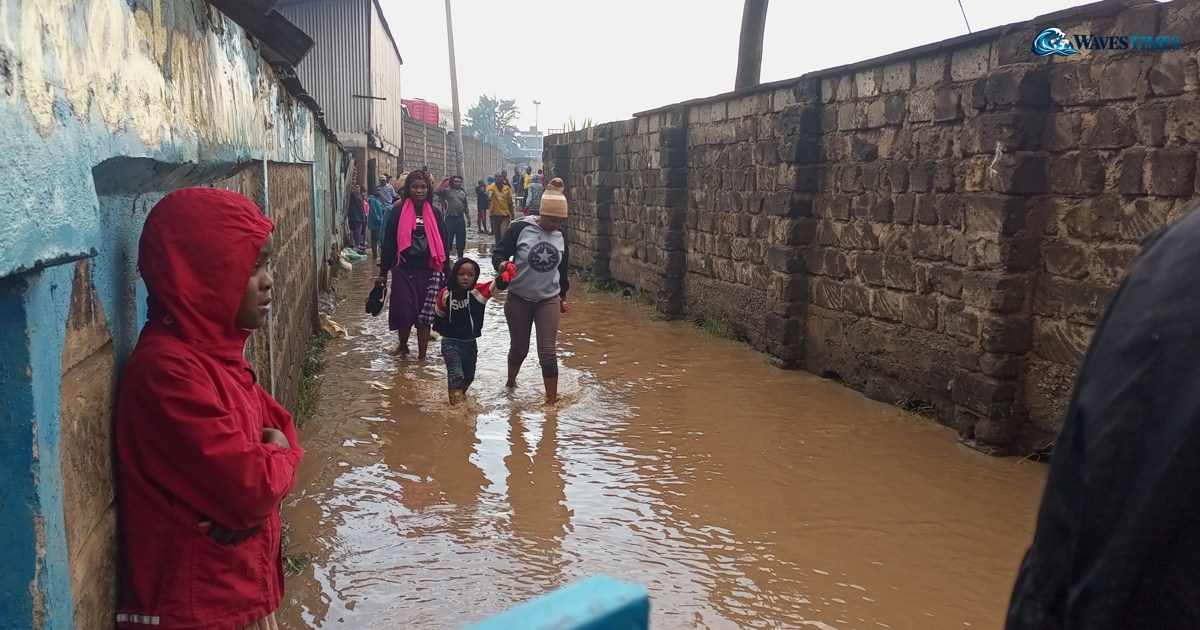
File photo: Residents walk through floodwater in a Nairobi neighbourhood. Rudian kd / Wikimedia Commons, CC BY-SA 4.0. Cropped and Waves Times logo added.
Kenya’s November forecast identifies high-risk counties
The Kenya Meteorological Service’s official November forecast, issued on 30 October, expects above-average rainfall across much of the country. Areas named include Nairobi, Kisumu, Mombasa, Garissa, Busia, Tana River, Baringo and parts of West Pokot and Samburu. The forecast is a warning about likely conditions, not a report that all these counties have already flooded.
The agency’s weekly forecast covering 10–16 November also expected rainfall in numerous counties. Conditions vary from one locality to another, so residents should consult the latest county-level advisories rather than assume every area faces the same risk.
Shelters, drainage and emergency medical response
Nairobi County officials told the Associated Press that about 172 locations had been identified as possible emergency shelters, with food and medicine to be made available if evacuations were required. The city has also been clearing blocked drainage channels and planning mobile-phone alerts.
The World Health Organization says Kenya has been preparing military medical teams to support emergency healthcare during severe flooding. A national assessment cited by WHO identified 5,660 health facilities in at-risk areas, underlining the importance of maintaining medical services if roads become impassable or water supplies are contaminated.
The figure of 1.5 million refers to people potentially affected, not a confirmed count of those already displaced or injured. Authorities have urged people near rivers and other vulnerable areas to follow evacuation advice and keep essential documents accessible.
Kenya El Niño flood risk and local preparedness
The Kenya El Niño flood risk varies by location: riverside homes, low-lying neighbourhoods and roads with inadequate drainage face different threats from communities near steep slopes where landslides are possible. Officials say warnings must be followed by practical evacuation arrangements and reliable communication with residents.
Kenya’s government has asked county authorities to identify high-risk locations and safer ground, while disaster teams prepare supplies and emergency response plans. These measures are intended to reduce harm if rainfall causes flooding; they are not confirmation that the forecast impacts have already occurred.
Discover more from Waves Times
Subscribe to get the latest posts sent to your email.