


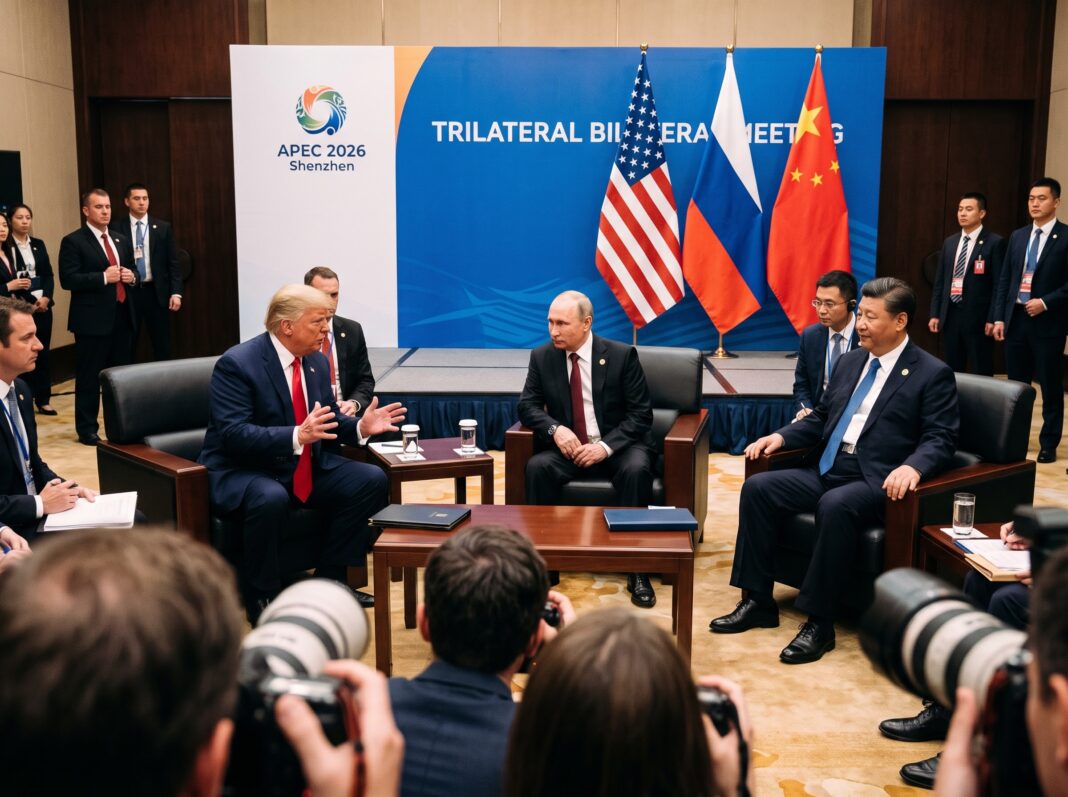
A potential Trump meeting Putin Xi is dominating international headlines after the US president publicly expressed his willingness to engage in trilateral talks. Speaking to reporters outside the White House, Trump indicated he is open to sitting down with Russian President Vladimir Putin and Chinese President Xi Jinping to discuss nuclear weapons and comprehensive denuclearization. The unprecedented summit could take place as early as late November on the sidelines of the upcoming APEC summit in Shenzhen, China.
The prospect of this high-level meeting marks a significant shift in US foreign policy and global diplomatic strategies. While the primary focus of the talks is aimed at halting a burgeoning global arms race, the ongoing conflict in Eastern Europe is also heavily featured on the agenda.
The Geopolitical Stakes of a Trump Meeting Putin Xi
This proposed trilateral summit has generated immediate and intense pushback from Eastern European allies. Ukrainian officials are particularly alarmed, as the country has not been invited to participate in the APEC summit or the resulting side negotiations.
- Exclusion Concerns: Ukrainian Foreign Minister Andrii Sybiha strongly warned against the talks, stating that inviting Putin to the negotiating table only serves to feed his appetite for self-aggrandizement and gives him an undeserved stature.
- Shifting US Stance: Trump further fueled anxieties by suggesting it might be time for “somebody else to negotiate on behalf of Ukraine,” signaling a potential scaling back of direct US support for the current Ukrainian leadership.
- Nuclear Priorities: The US administration remains heavily focused on curbing the deployment of new nuclear warheads, viewing a direct agreement with Moscow and Beijing as essential for long-term global stability.
Diplomatic experts caution that navigating a Trump meeting Putin Xi will be incredibly complex. Both China and Russia share a deeply aligned strategic partnership and could easily coordinate their positions to outmaneuver US negotiation efforts. By attempting to handle denuclearization, trade disputes, and territorial conflicts simultaneously, the administration risks stalling progress on all fronts.
If the meeting officially materializes in Shenzhen, it will represent the first time these three world leaders have held a dedicated trilateral session outside of broader multilateral forums. As the international community watches closely, the outcomes of these proposed talks could fundamentally redraw the boundaries of global security and redefine the future of the Ukrainian conflict.
Discover more from Waves Times
Subscribe to get the latest posts sent to your email.