

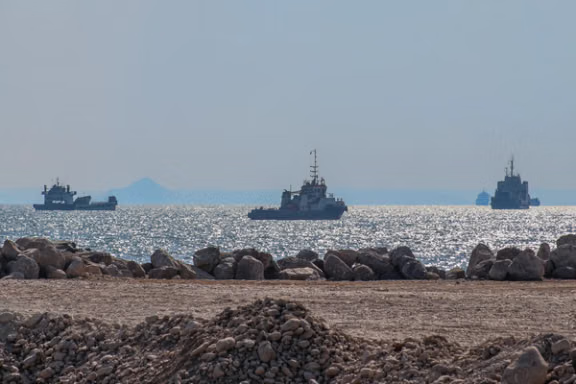

Iran’s attempts to reduce the economic impact of the US naval blockade are proving insufficient, with economists warning that alternative trade routes and domestic measures cannot fully replace lost oil revenues. Despite assurances from Iranian officials that the country can withstand the pressure, economists say restrictions on oil exports, foreign currency earnings and international trade are increasingly affecting government finances and economic stability.
According to a report by Iran International, US Treasury Secretary Scott Bessent said Iran had exhausted its floating oil stocks and had not loaded a tanker since Washington launched its economic pressure campaign in August.
Alternative Trade Routes Offer Limited Relief
Iran has increasingly turned to land-based trade routes and neighbouring countries in an attempt to maintain exports and imports amid restrictions on maritime trade. Reports indicate that the country has attempted to move petroleum products, including fuel oil and liquefied petroleum gas, through routes involving neighbouring countries such as Pakistan and Afghanistan.
However, economists argue that these alternatives cannot match the scale of Iran’s previous crude oil exports. Energy expert Hamid Hosseini reportedly estimated that potential exports through several alternative routes could reach between 250,000 and 300,000 barrels per day, substantially below earlier export levels. Analysts have also warned that logistical limitations, border restrictions and higher transportation costs could further reduce the effectiveness of these arrangements.
Oil Revenue Losses Put Pressure on Government Finances
Oil revenues remain a major source of funding for the Iranian government, making the disruption of exports particularly significant. Economists have warned that declining oil income could leave authorities struggling to finance public spending and manage the country’s economic challenges. Measures such as borrowing, selling state-owned assets and relying on monetary financing may provide temporary relief but are unlikely to address the underlying problems. The restrictions have also increased concerns about Iran’s access to foreign currency, which is essential for importing goods and maintaining economic activity.
Inflation and Rising Living Costs
The economic pressure is also being felt by households as inflation continues to affect the cost of essential goods. Iran’s consumer prices reportedly increased by 88.7 per cent year-on-year in October, while food and beverage prices rose by 112.6 per cent over the same period, according to figures from the Statistical Centre of Iran cited in recent reporting.
Iranian officials have sought to reassure citizens that strategic reserves remain adequate and that authorities are working to prevent further increases in the prices of basic goods. However, economists warn that sustained restrictions on trade and foreign currency earnings could make it increasingly difficult to stabilise prices and protect household purchasing power.
Diplomacy Remains a Possible Solution
The debate within Iran over how to respond to the blockade has intensified, with some officials and economists advocating economic adaptation and diplomacy, while others favour a more confrontational approach. Economists have argued that improving international relations and reducing trade restrictions would be essential to restoring financial stability and easing pressure on businesses and households. The growing economic strain highlights the limitations of Iran’s efforts to rely on alternative trade routes and domestic measures alone to offset the impact of the US naval blockade.
Discover more from Waves Times
Subscribe to get the latest posts sent to your email.