

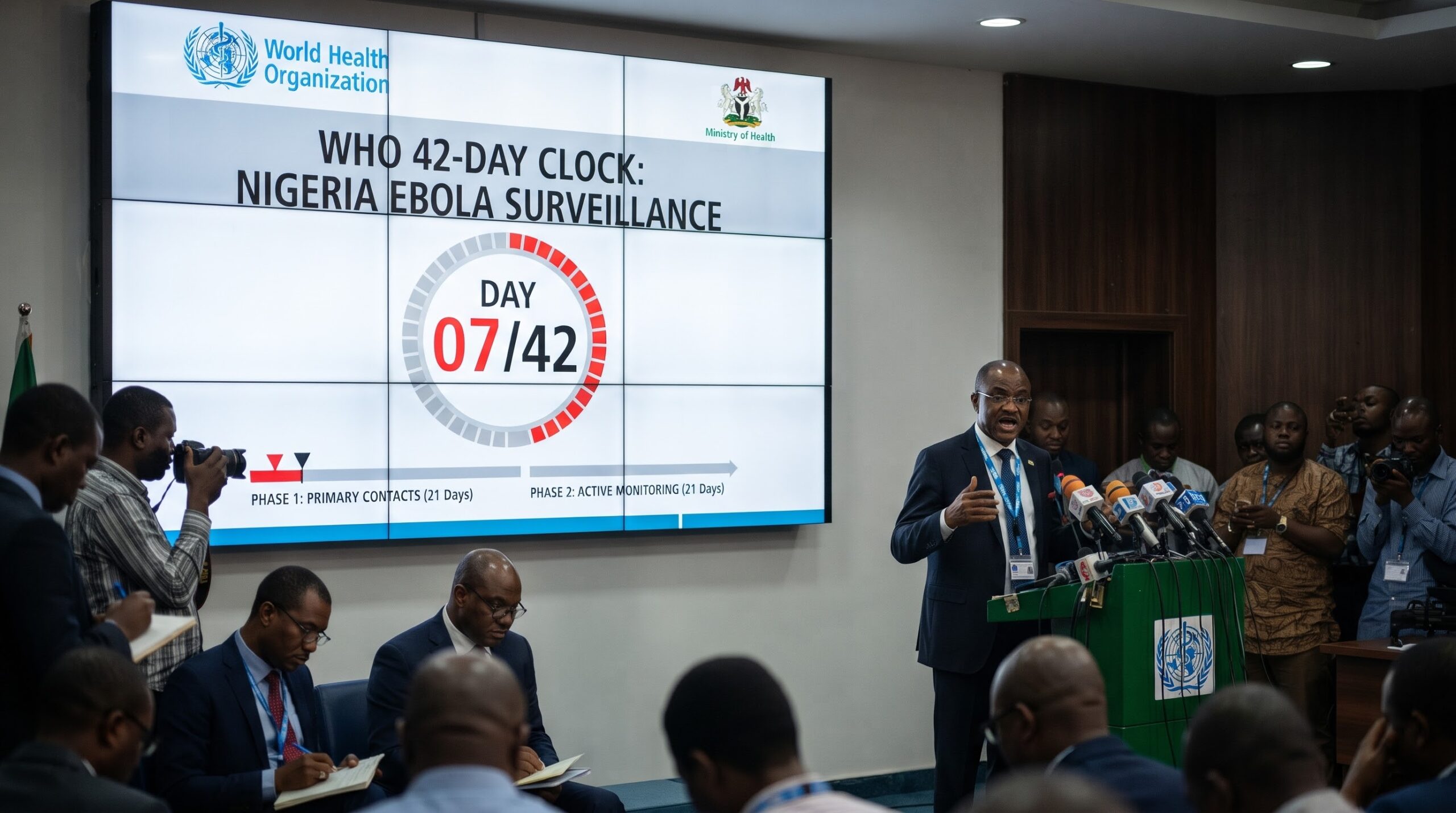

The WHO 42-day clock has officially started ticking for Nigeria as health authorities emphasize that the country cannot yet be classified as entirely Ebola-free. Although the initial infected patient has been medically evacuated, international public health guidelines require a stringent observation phase before an outbreak can be officially closed.
World Health Organization representatives have clarified that absolute clearance depends entirely on maintaining uninterrupted zero-case surveillance. This precautionary window is designed to catch any secondary transmissions early and protect the broader population from hidden chains of infection.
Understanding the 42-Day Monitoring Protocol
The standard protocol set by global health agencies is divided into two distinct monitoring phases to account for the virus’s maximum incubation timeline.
- Medical teams must actively track all identified primary contacts for an initial 21-day window.
- An additional 21-day surveillance period must follow to ensure complete safety, bringing the total countdown to 42 continuous days.
If any new probable or confirmed case emerges during this period, the entire countdown resets to day one.
Public Health Implications and Next Steps
While the recent evacuation of the patient to Switzerland relieved immediate pressure on local isolation facilities, health experts stress that complacency is dangerous. Contact tracers continue to monitor dozens of individuals who interacted with the patient during the early stages of illness.
As the WHO 42-day clock progresses, compliance with surveillance protocols remains critical for restoring absolute confidence in national health safety. Public health officials continue to urge calm, assuring citizens that technical guidelines—rather than political pressures—dictate the ongoing monitoring strategy.
Discover more from Waves Times
Subscribe to get the latest posts sent to your email.