
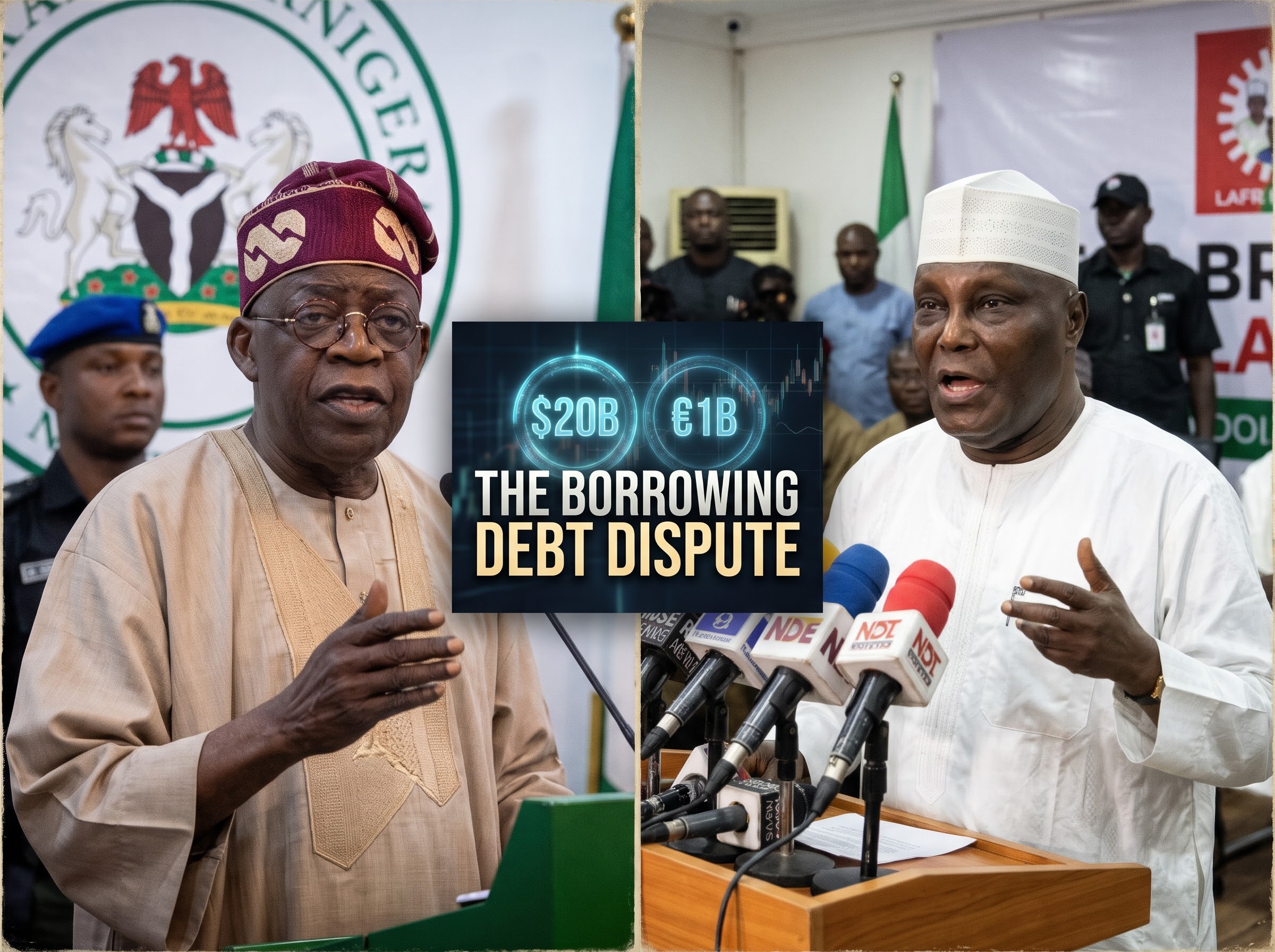

The Tinubu 20 billion borrowing dispute is currently sending shockwaves through Nigeria’s political and economic sectors. Former Vice President Atiku Abubakar has heavily criticized President Bola Tinubu’s recent request to secure an additional $20.52 billion and €1.045 billion in foreign loans. Atiku argues that the administration has failed to provide sufficient transparency regarding exactly which infrastructure projects these massive funds will finance.
This fiscal controversy comes at a time when the country is already grappling with significant economic reforms and high inflation. Citizens and economic experts alike are questioning the long-term sustainability of accumulating more foreign debt without a clear repayment strategy.
The Core of the Tinubu 20 Billion Borrowing Dispute
At the heart of this intense political clash is the sheer scale of the requested funds and the absence of a detailed project breakdown. The presidency maintains that these loans are absolutely essential for stabilizing the national budget and funding critical development across the country.
However, opposition figures strongly disagree with this approach and are demanding immediate clarity. Key concerns raised during this debate include:
- The lack of itemized, revenue-generating projects attached to the loan request.
- Nigeria’s already high debt-servicing ratio, which consumes a large portion of national revenue.
- The potential exchange rate risks associated with borrowing such massive amounts in foreign currency.
- The severe financial burden this debt will ultimately place on future generations of Nigerians.
Atiku Abubakar Demands Total Accountability
Atiku Abubakar has not held back in his public condemnation of the borrowing plan. The former presidential candidate stated that securing such astronomical loans without absolute clarity is highly irresponsible and dangerous for the country’s economic future. He challenged the federal government to immediately publish a comprehensive list detailing how every dollar and euro will be spent.
This demand for accountability has deeply resonated with various civil society organizations across the nation. These groups are now applying intense pressure on the National Assembly to thoroughly scrutinize the request and summon cabinet ministers before granting any legislative approval.
What This Means for the Nigerian Economy
The outcome of this borrowing request will have profound implications for the nation’s macroeconomic future. If approved and utilized correctly, the funds could potentially inject much-needed capital into stalling national infrastructure projects and stimulate growth.
Conversely, financial analysts warn that without strict oversight, the influx of foreign debt could further destabilize the economy. As lawmakers prepare to debate the issue in the coming weeks, the entire country is watching closely to see how this high-stakes financial standoff will ultimately be resolved.
Discover more from Waves Times
Subscribe to get the latest posts sent to your email.