

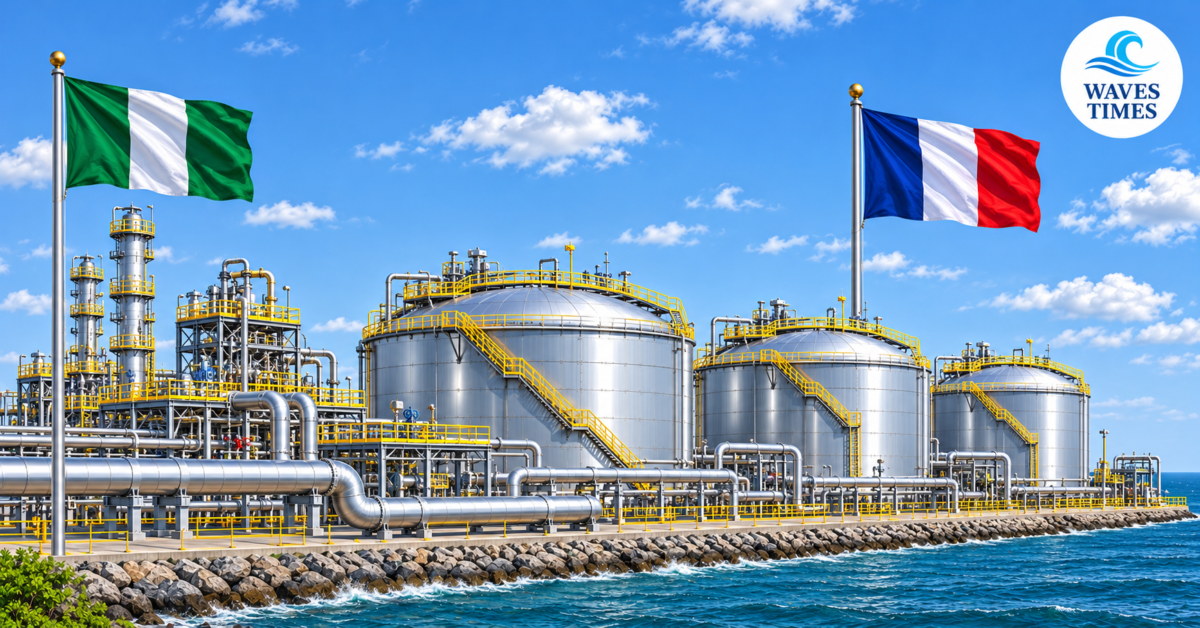

Nigeria-France energy investment talks in Lagos focused on expanding gas infrastructure, sharing technical expertise and creating more opportunities for Nigerian suppliers. At a roundtable held during French Week 2026, industry leaders pointed to Nigeria LNG’s Train 7 expansion as an example of how international partnerships can support local manufacturing.
The Franco-Nigerian Chamber of Commerce and Industry organised the roundtable, which brought together energy executives, government representatives and diplomats. Participants discussed how the two countries could attract more investment into Nigeria’s energy sector while improving domestic gas supply and cutting emissions from oil and gas operations.
What came out of the Nigeria-France energy investment talks
Matthieu Bouyer, managing director and chief executive of TotalEnergies Nigeria, identified three areas for closer cooperation. They included reducing emissions, developing infrastructure to bring more gas to domestic users and helping Nigerian companies build the technical expertise needed for larger energy projects.
Bouyer put trade between the two countries at about $4.7 billion in 2025. He said more than 100 French companies operate in Nigeria across industries including energy, logistics, technology and agriculture. The trade figure covers the wider commercial relationship between the countries.
For manufacturers and power producers, the infrastructure question is practical. A gas reserve only becomes useful to a factory or power plant once it can be processed and delivered reliably. Bouyer said adequate infrastructure and a stable investment environment would be needed to attract the capital required to develop those resources.
NLNG targets late 2027 for Train 7 operations
Nigeria LNG managing director Adeleye Falade said construction on Train 7 was about 94 per cent complete. Engineering and procurement were both more than 99 per cent complete, and the company is targeting the end of 2027 to begin operations.
The expansion is expected to raise NLNG’s annual production capacity from 22 million tonnes to about 30 million tonnes. That adds roughly eight million tonnes of annual capacity once the project is operating at the expected level.
Laurent Favier, France’s consul-general in Lagos, also highlighted the $550 million Ubeta gas development by TotalEnergies and NNPC Limited. The project is expected to deliver first gas in 2027 and supply feed gas for the Train 7 expansion. That link matters because a larger liquefaction plant needs enough gas coming in to make use of its added capacity.
Where Nigerian manufacturers fit in
Falade said Nigerian companies supplied components for Train 7, including pressure vessels, cables and valves. He put the project’s local content at about 95 per cent and said roughly 16,000 people were engaged during construction. He also cited a broader estimate of about 40,000 jobs supported by wider project activity.
Manufacturing components for a large gas project can give suppliers experience they can use when bidding for future work. The discussion on technology transfer also covered training and knowledge sharing, which could help Nigerian contractors qualify for more technically demanding contracts.
What the expansion could mean for cooking gas
Falade said Train 7 could increase NLNG’s capacity to supply liquefied petroleum gas, commonly called cooking gas, to the domestic market by about 50 per cent. He said the company had been directed in 2022 to channel all its LPG production to Nigeria’s domestic market.
For households, the effect will depend on how much additional cooking gas actually reaches retailers and how much it costs to distribute. The 50 per cent figure describes NLNG’s expected supply capacity after the expansion. Retail prices will also depend on conditions further along the supply chain.
The next milestones are whether Ubeta delivers first gas in 2027 and whether Train 7 starts operations by the end of that year. Those dates will help show when the additional capacity discussed at the roundtable could begin translating into supplies for domestic and export markets.
Discover more from Waves Times
Subscribe to get the latest posts sent to your email.